What Is Experiential Learning and Why It Is the Future of Business…
Experiential learning is the fastest-growing model in business education globally — and the most misunderstood in India. Here…

May 25, 2026
When families compare BBA programmes in India, they almost always compare the wrong number. The visible cost — the amount that appears on the fee structure page — is only one part of the equation. The real cost of a business degree is what it costs you in opportunity: three years of professional experience you did not build, one or two postgraduate years you will need to compensate, and the salary gap between graduates who worked and graduates who studied. The most expensive BBA is not the one with the highest tuition. It is the one that leaves you least ready to earn.
Written by the Let’s Enterprise Team | May 2026
Three years is a long time. A student who begins building real professional experience at 17 enters the job market at 21 with a meaningful head start over a peer who spent the same three years in lectures and examinations. The salary gap between those two graduates compounds over the first five years of their career in ways that no certificate or credential can quickly close.
This is the cost that does not appear on any fee structure page — but it is the one that matters most to long-term career outcomes. Time invested in the wrong way is the most expensive cost in any educational choice.
The most important question about any BBA programme is not what it costs — it is what students are doing during those three years. Are they in classrooms learning about business? Or are they in companies doing it? The answer to that question determines the career value of the programme more than any other factor.
A degree is a threshold — it gets you considered. What gets you hired and promoted is the evidence you bring to that conversation. Graduates who leave with documented professional experience, client project portfolios, and real references have a fundamentally different market position than graduates who leave with grades and a certificate.
A UGC-approved BBA from a recognised university keeps every door open — government employment, further education, professional certifications. Programmes without UGC recognition, regardless of their claimed outcomes, limit your options without your knowledge. The credential you earn should never become a ceiling.
Most BBA programmes leave the work experience question entirely to the student — a summer internship here, a project there. The programmes that change outcomes are the ones where real professional work is not an add-on but the core of the degree itself. The difference between these two approaches is not subtle. It is the entire career.
At Let’s Enterprise, the question of cost is reframed from the start. The Working BBA is not designed to be the cheapest option — it is designed to be the most valuable one. Students earn a UGC-approved BBA from DY Patil University or Pune University while completing 4 real apprenticeships and 13 live client projects across three years.
By the time a Working BBA student graduates, they have 15 months of documented real-work experience, three business specialisations, and a recognised degree — before the age of 21. The question is not what the programme costs. The question is what you are worth on the other side of it.
Ready to invest in the right kind of BBA?
Let’s Enterprise’s Working BBA gives you a UGC-approved degree from DY Patil University or Pune University plus 4 real apprenticeships and 13 live client projects. 50 seats. August 2026 cohort.
Beyond the programme price, families should evaluate what students actually do during the three years, whether the degree is UGC-approved, what graduates leave with in terms of real-world experience, and whether practical work is built into the curriculum or left to the student to arrange separately.
A BBA is worth it when it combines a recognised UGC-approved credential with structured real-world experience. In 2026, employers across India flag practical skills and demonstrated work experience as the primary differentiators — a degree alone is necessary but no longer sufficient.
The most valuable BBA programmes integrate real work experience — apprenticeships, live client projects, and actual professional accountability — into the degree itself. Graduates from these programmes enter the job market with both the credential and the demonstrated track record that traditional degrees do not build.
Most BBA programmes focus on classroom learning with limited real-world application. Graduates enter the job market without the practical skills employers require, leading many to pursue MBA or other postgraduate programmes to fill that gap. Programmes that integrate real work during the BBA itself avoid this cycle entirely.
A traditional BBA delivers classroom education across three years, leaving work experience to be built separately after graduation. The Working BBA integrates 4 real apprenticeships and 13 live client projects into the three-year degree, so students graduate with both a UGC-approved credential from DY Patil University or Pune University and 15 months of documented professional experience.


Experiential learning is the fastest-growing model in business education globally — and the most misunderstood in India. Here…
Work-integrated education — earning income and building professional experience while studying for a degree — is growing fast…

'Communication skills' is the most common hiring requirement in India — and the most misunderstood. Here is what…

Let's Enterprise is a pioneering educational institution that empowers students with hands-on business skills through its unique UG-M.E.D. program. With campuses in Pune and Goa, it bridges the gap between traditional learning and real-world experience, shaping the future of tomorrow's entrepreneurs.
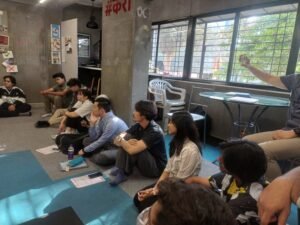
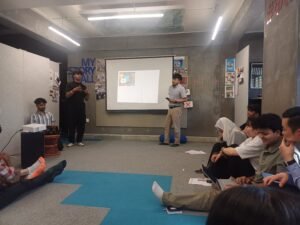
Discover how our first-year students are actively engaging in real-world business projects, guided by facilitator Sharjeel Shaikh.