What Is Experiential Learning and Why It Is the Future of Business…
Experiential learning is the fastest-growing model in business education globally — and the most misunderstood in India. Here…

May 23, 2026
Seven questions will tell you more about a business school than any brochure, ranking, or campus visit. Ask them before you sign anything. The schools with strong answers will welcome the scrutiny. The schools with weak answers have just told you something important.
The Indian business education market has expanded fast. Programmes from Masters Union, Mesa School, and dozens of newer entrants compete using similar language: “real-world,” “practitioner-led,” and “outcomes-focused.”” The questions below cut through the language to the evidence underneath.
Neither Masters Union nor Mesa School of Business currently holds UGC recognition — a fact their brochures mention quietly, if at all, and a fact that should be the first line of any honest comparison.
This does not mean non-UGC programs are bad investments. It means the absence of recognition must be a conscious decision, not an oversight. Ask directly: “Is this programme UGC-recognised?” Require a written answer.
Every program now claims to be “real-world” or “experiential.” Ask: how many hours per week does a student spend on commercial work with real clients, real stakes, and real deliverables?
The gap between “experiential” as a marketing word and “experiential” as a structural curriculum design is the most important distinction in Indian business education today.
Placement numbers are almost always reported as averages of top performers. The number that matters is the median.
Masters Union reports Rs 33 LPA average placement. That number, taken alone, tells you very little about what you specifically are likely to earn.
Ask the school for a complete picture of what the programme involves — not just the headline number, but what you give up during the programme period and what you walk away with on the other side. Include relocation costs if applicable, and consider the opportunity cost of time not spent building professional experience. A programme that cannot answer this question clearly is telling you something important about how it thinks about your outcomes.
The true cost of any programme extends well beyond the headline number — always ask for the full picture.
Ask: what percentage of teaching hours are delivered by full-time faculty versus visiting practitioners? What are the names of the core faculty? What are their professional backgrounds? Are they available for mentorship outside class?
Ask for a breakdown of the most recent graduating cohort: where do they work, in what roles, at what seniority levels? Speak to alumni you find independently through LinkedIn — not alumni the school selects. The candour of unsolicited alumni is the most reliable signal you will get.
The counterfactual for any postgraduate programme is not “do nothing” — it is “what could five years of structured real-world work starting at 18 have built instead?”
Both Masters Union and Mesa School are postgraduate programs. To attend either, you must first complete an undergraduate degree. You enter the job market at 23 or 24.
Students who begin real commercial work at 18 enter the job market at 21 with three years of demonstrated professional experience — an advantage that no postgraduate credential, however prestigious, can fully replicate.
Request cohort-level placement reports, not summary slides. Ask for median salary, percentage placed within 90 days, and the names of top hiring companies with volume per company. Speak to 3-5 alumni you find independently on LinkedIn. Cross-reference claims against public LinkedIn data for recent graduates.
It can be, but only if you have consciously evaluated the trade-off. Non-UGC programs are ineligible for government employment, certain professional licences, and some foreign university admissions. If none of those apply to your specific career path, a high-quality non-UGC program may still deliver strong outcomes — but the decision must be informed, not accidental.
Masters Union’s Rs 34L fee plus 16 months of Gurgaon living costs typically totals Rs 42-48 lakhs. Mesa School’s Rs 24L fee plus 12 months in Bangalore typically totals Rs 31-36 lakhs. Factor in education loan interest if financing.
If you are finishing Class 12 and want to skip the five-year wait, Let’s Enterprise offers a 3-year UGC-approved Working BBA in Pune built around apprenticeships from day one. Learn more at letsenterprise.in.


Experiential learning is the fastest-growing model in business education globally — and the most misunderstood in India. Here…

Most families calculate the tuition fee when budgeting for a BBA in India. The real cost is two…
Work-integrated education — earning income and building professional experience while studying for a degree — is growing fast…

Let's Enterprise is a pioneering educational institution that empowers students with hands-on business skills through its unique UG-M.E.D. program. With campuses in Pune and Goa, it bridges the gap between traditional learning and real-world experience, shaping the future of tomorrow's entrepreneurs.
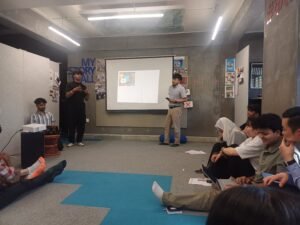
Discover how our first-year students are actively engaging in real-world business projects, guided by facilitator Sharjeel Shaikh.