What Is Experiential Learning and Why It Is the Future of Business…
Experiential learning is the fastest-growing model in business education globally — and the most misunderstood in India. Here…

May 7, 2026
Written by Aastha Srivastava for Let’s Enterprise.
Having spent time in the corporate world before moving into higher education, one thing becomes clear very quickly: hiring managers are not primarily evaluating a fresher’s GPA or how polished their English sounds.
In the first 20 minutes, they are usually scanning for three things: clarity of thought, evidence of execution, and ownership.
Freshers often think they are being tested on knowledge. In reality, they are being evaluated on readiness.
Strong interview impressions form early. Research often shows that interviewers create a first judgment in the first few minutes and then spend the rest of the conversation validating or questioning it.
Employers also consistently rank problem-solving, teamwork, and communication ahead of GPA alone. The signal is clear: applied capability matters more than academic record.
At Let’s Enterprise, this shift is visible all the time. A student who once said, I studied marketing or I learned finance concepts, starts speaking very differently after doing a live project.
Instead of theory, they say things like: We ran ₹10,000 worth of ads. CAC was too high, so we pivoted. Or: I made three versions of this campaign for three different customer personas.
Same student. Different depth. The difference is not confidence. It is evidence.
Interviews are not vivas. They are risk assessments.
In a short interaction, hiring managers are silently asking:
Soft skills without context feel hollow. Execution gives those skills weight.
The future of work is not about knowing more. It is about demonstrating applied capability quickly.
There is a huge difference between saying we studied digital marketing and saying we ran ₹10,000 in ads, CAC was high, and we pivoted to a different approach.
Specific details signal execution.
Weak language sounds like: We were told to…
Stronger language sounds like: I decided to… or I noticed… so I changed…
Ownership reduces perceived hiring risk.
Can you take a messy problem and explain it clearly? Clarity beats confidence more often than students realise.
Students who have done real work talk about mistakes calmly. They can describe what failed, what they learned, and what they changed. Perfection often signals inexperience rather than excellence.
Not loudness. Not accent. Not polish for its own sake. What stands out is genuine curiosity and evidence that the person is serious about growth.
Managers hire trajectory, not surface polish.
Stop collecting certificates without depth. Start collecting experiences you can explain with real detail, trade-offs, and outcomes.
Marks still matter, but exposure is what shapes interview readiness. Students who have worked on real tasks speak with more depth and maturity.
If you want stronger freshers, invest in execution-led ecosystems. Students become interview-ready when they have had to make decisions, solve problems, and own outcomes.
Most freshers do not fail interviews because they lack talent. They fail because they lack evidence.
Evidence only comes from doing.
In a 20-minute interview, potential is often invisible. Execution is not.
Talent may be assumed. Evidence is decisive.
In the real world of hiring, evidence wins.
If this resonates, explore how students are building real execution evidence at letsenterprise.in.


Experiential learning is the fastest-growing model in business education globally — and the most misunderstood in India. Here…

Most families calculate the tuition fee when budgeting for a BBA in India. The real cost is two…
Work-integrated education — earning income and building professional experience while studying for a degree — is growing fast…
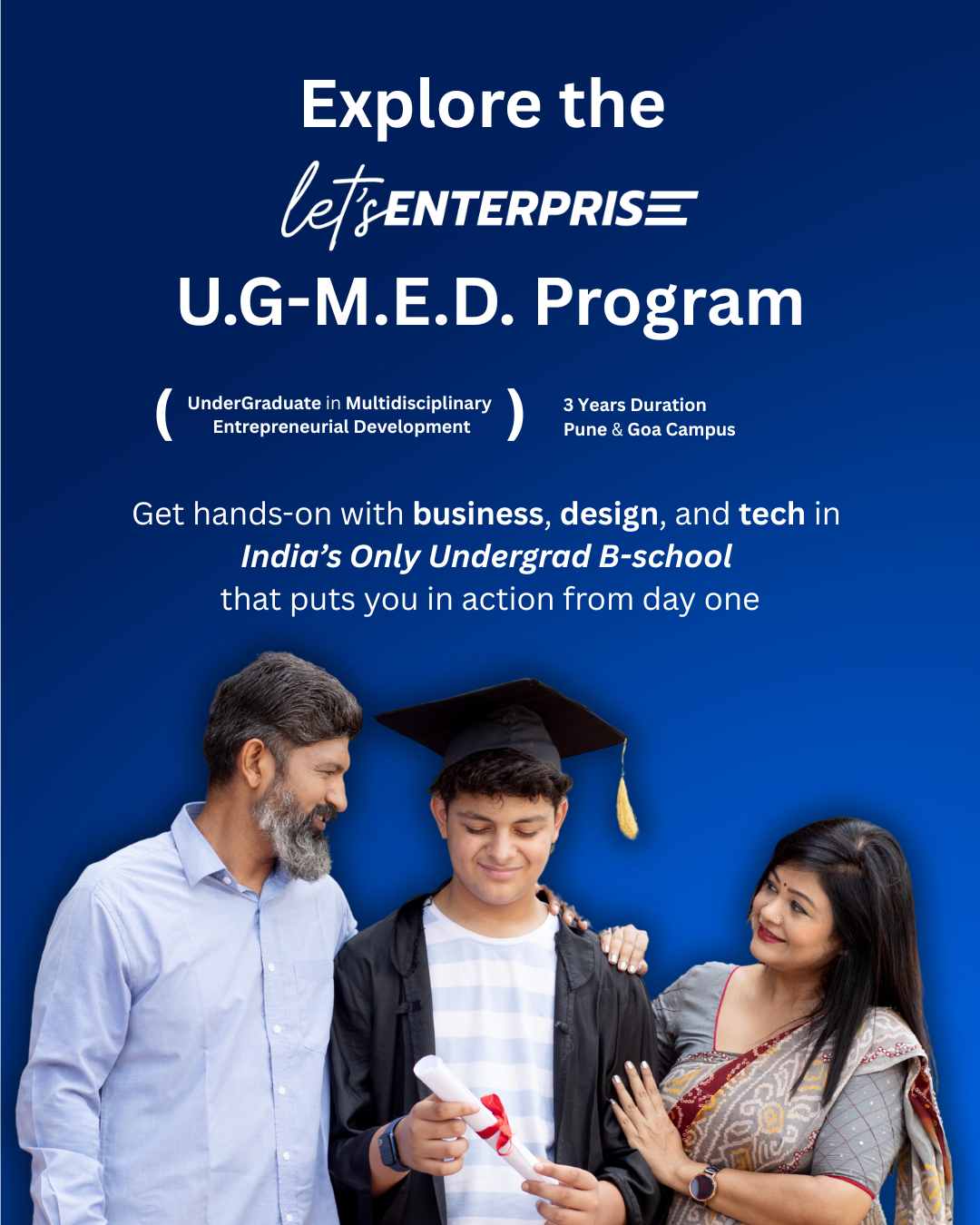
Let's Enterprise is a pioneering educational institution that empowers students with hands-on business skills through its unique UG-M.E.D. program. With campuses in Pune and Goa, it bridges the gap between traditional learning and real-world experience, shaping the future of tomorrow's entrepreneurs.
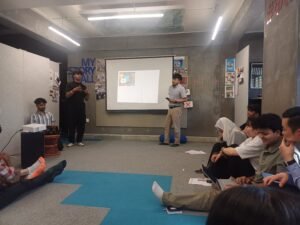
Discover how our first-year students are actively engaging in real-world business projects, guided by facilitator Sharjeel Shaikh.