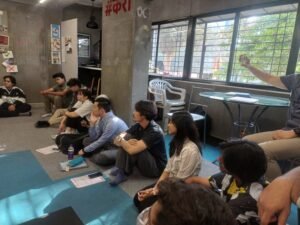
What Is Experiential Learning and Why It Is the Future of Business…
Experiential learning is the fastest-growing model in business education globally — and the most misunderstood in India. Here…

May 6, 2026
Written by Anu Pazhayannur for Let’s Enterprise.
For generations, education systems around the world have relied on a familiar metric: marks. A student’s academic journey is often summarised by percentages, grades, or GPAs. These numbers shape admissions decisions, scholarships, and sometimes even career opportunities.
But an increasingly important question is hard to ignore: what do marks actually measure?
In most cases, marks reward how effectively a student can recall and reproduce information under exam conditions. That made more sense when information itself was scarce. Today, information is instantly accessible, while the truly scarce abilities are judgment, creativity, execution, collaboration, and problem solving.
If the nature of work is evolving, the way we measure learning must evolve as well.
Marks provide a snapshot of performance at a specific moment. They show how well a student performed in a controlled academic environment.
But the real world rarely works under those conditions. In professional environments, people are not expected to recall information from memory without assistance. They are expected to interpret complexity, navigate uncertainty, communicate clearly, and collaborate with others to solve problems.
Consider the capabilities most employers value today:
These capabilities do not emerge from memorisation alone. They develop through practice, exposure, and reflection. A single exam score cannot reveal whether a student is becoming better at solving problems, adapting to feedback, or working effectively with others.
Marks often measure performance. They rarely measure capability development.
The startup ecosystem evaluates progress very differently. Startups do not judge themselves by how well they understand business theory. They focus on signals of real progress.
Founders constantly ask:
Progress is measured through traction, not theoretical understanding.
A startup that launches, receives feedback, and improves is seen as making meaningful progress, even if the first version was imperfect. Learning happens through iteration cycles.
This raises an important possibility for education: what if universities measured learning in a similar way?
Imagine an education system focused less on one-time exam scores and more on continuous development.
Instead of asking only whether a student passed an exam, educators could ask:
Learning would no longer be judged solely by outcomes. It would also be measured through growth trajectories.
This is the shift from marks to mastery.
Marks often reward short-term performance. Mastery reflects long-term capability.
Mastery is not about answering questions correctly once. It is about applying a skill effectively across different contexts.
For students studying business, mastery might include:
These abilities rarely develop through lectures alone. They require experience, experimentation, and reflection. If institutions want to prepare students for real professional environments, they need ways to observe and evaluate these capabilities in action.
At Let’s Enterprise, this challenge has led us to rethink how student development is understood and evaluated.
Rather than focusing only on academic scores, we explore how prepared students are to operate in real professional environments. The goal is not simply to determine how much information a student has absorbed, but how effectively they can apply their learning in situations that resemble the realities of work.
That means looking at a range of capabilities, including:
By observing students across these dimensions, it becomes possible to build a fuller picture of development. The focus shifts from isolated academic performance to how students are growing into people who can contribute meaningfully in real-world settings.
Traditional evaluation usually relies on a single perspective: the professor.
But in real workplaces, performance is observed by many stakeholders. Managers, colleagues, clients, and the individual themselves all contribute to understanding how well someone is performing.
Student development can also be evaluated through multiple viewpoints:
Each perspective reveals something different. Combined, they create a more complete understanding of student progress.
Experiential learning changes not only how students learn, but also how their progress is assessed.
Instead of relying only on written exams, students engage with real projects, real clients, and real problems. In these situations, learning is demonstrated not through memorised answers but through the ability to apply ideas in practical contexts.
The quality of the work becomes the evidence of learning. Students are evaluated through the insights they uncover, the solutions they propose, the clarity with which they communicate, and the way they respond to feedback while improving their work.
In this sense, the project becomes the real examination.
Assessment also becomes a tool for development rather than just a final verdict. Instead of asking only what grade a student received, educators and students begin asking better questions: what improved, what capability was developed, and what still needs strengthening?
Artificial intelligence is transforming many forms of knowledge work. Tasks built on information retrieval or routine analysis are increasingly supported by automation.
What differentiates people now are the capabilities machines struggle to replicate:
Educational institutions that continue to measure success primarily through memory-based exams may struggle to capture these capabilities.
If the future of work values adaptability and execution, the future of education must learn how to measure those qualities too. At Let’s Enterprise, that is exactly what we are building. Learn more at letsenterprise.in.
Education has long served as a system for certifying knowledge. But the world students are entering demands more than knowledge alone. It requires people who can interpret complexity, collaborate with others, and turn ideas into action.
Marks can tell us how well a student answered questions. Mastery reveals how well a student can navigate real challenges.
As work continues to evolve, educational institutions face a choice: they can keep measuring what is easy to test, or they can begin measuring what truly matters.
The shift from marks to mastery is not simply a change in assessment methods. It is a change in how we understand the purpose of education itself.


Experiential learning is the fastest-growing model in business education globally — and the most misunderstood in India. Here…

Most families calculate the tuition fee when budgeting for a BBA in India. The real cost is two…
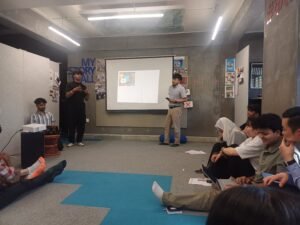
Work-integrated education — earning income and building professional experience while studying for a degree — is growing fast…
Let's Enterprise is a pioneering educational institution that empowers students with hands-on business skills through its unique UG-M.E.D. program. With campuses in Pune and Goa, it bridges the gap between traditional learning and real-world experience, shaping the future of tomorrow's entrepreneurs.
Discover how our first-year students are actively engaging in real-world business projects, guided by facilitator Sharjeel Shaikh.