What Is Experiential Learning and Why It Is the Future of Business…
Experiential learning is the fastest-growing model in business education globally — and the most misunderstood in India. Here…

May 6, 2026
Written by Raunaq Amarnani for Let’s Enterprise.
Students entering the workforce often ask a version of the same question: Should I hold out for the big brand, or is a startup okay?
The framing itself reveals a bias. It assumes the startup is the fallback, while the large brand is the goal. That is worth challenging.
The most important difference between large organizations and MSMEs or startups is not size. It is proximity to consequence.
Large companies offer scale. They expose young professionals to sophisticated systems, global standards, and complex organizational structures. They teach discipline, process optimization, and quality control.
Structured onboarding reduces uncertainty and gives new professionals a clear foundation. A known brand name on a resume also opens doors and signals credibility before you have had the chance to demonstrate it yourself.
These are real advantages, and they should not be dismissed.
In a large corporation, systems are already built and roles are clearly defined. A young professional may spend months working within a narrow scope, contributing to one function or part of a process.
In startups and MSMEs, the business is still evolving. Roles overlap. Problems do not arrive neatly categorized. People are required to understand the business as a whole rather than as a set of separate departments.
When resources are limited, the impact of decisions is visible very quickly. If a campaign underperforms, cash flow tightens. If operations are weak, customers feel it. If a deal closes, revenue improves. The feedback loop is short, and short feedback loops accelerate growth.
In large corporations, decisions move through multiple layers and responsibility is distributed across teams.
In startups and MSMEs, ownership appears much earlier. Individuals often handle end-to-end projects, not just pieces of them. That builds accountability and decision-making ability faster.
Corporate environments develop depth within one vertical. You may become highly skilled in analytics, operations, or HR.
Smaller businesses demand cross-functional involvement. In a single month, you may work on marketing strategy, vendor negotiation, customer conversations, and financial tracking. That builds a systems-level understanding of how businesses operate.
Large companies invest in structured onboarding and training, which is genuinely valuable.
MSMEs and startups teach through immersion. You learn because real problems require real solutions. Mistakes are visible, adjustments happen immediately, and the learning compounds quickly.
Corporations offer predictable processes and defined KPIs.
Startups operate in ambiguity. Market shifts, revenue fluctuations, and operational challenges require fast decisions with incomplete information. That builds adaptability, which increasingly matters as industries evolve and career paths become less linear.
A big brand strengthens your resume immediately. A smaller organization often strengthens your competence much faster.
The former increases initial visibility. The latter increases long-term capability. Both matter, but not equally at every stage of a career.
In MSMEs and startups, you see how marketing affects sales, how sales affect operations, how operations influence finance, and how finance shapes hiring decisions.
The business becomes visible as an interconnected system rather than a set of silos.
That systems perspective builds three capabilities that compound over time:
Working in an MSME or startup often means your portfolio reflects measurable outcomes: campaigns executed, revenue supported, and problems solved from beginning to end, rather than small contributions to a process someone else owns.
A recognizable logo offers reassurance, but learning density determines long-term professional strength. An environment that stretches responsibility often produces maturity faster than one that protects comfort.
Candidates who have worked in smaller organizations often show stronger ownership and adaptability. They understand trade-offs, are used to ambiguity, and are more comfortable taking initiative.
This is the nuance that matters. If a large organization provides real responsibility and cross-functional exposure, it can be equally powerful for early career growth. If a startup lacks mentorship or restricts development, small size becomes a liability rather than an advantage.
The advantage of MSMEs and startups lies in the typical intensity of involvement, not merely their scale.
Early career choices should optimize for learning velocity rather than brand association.
Responsibility compounds. Exposure compounds. Decision-making experience compounds.
Brand names open doors. Capability sustains performance once you are inside.
So before prioritizing the most recognizable name, ask the more strategic question:
Which environment will expand your capability the fastest?
If this resonates, explore how Let’s Enterprise builds this kind of cross-functional, accountability-driven learning through live client projects at letsenterprise.in.


Experiential learning is the fastest-growing model in business education globally — and the most misunderstood in India. Here…

Most families calculate the tuition fee when budgeting for a BBA in India. The real cost is two…
Work-integrated education — earning income and building professional experience while studying for a degree — is growing fast…
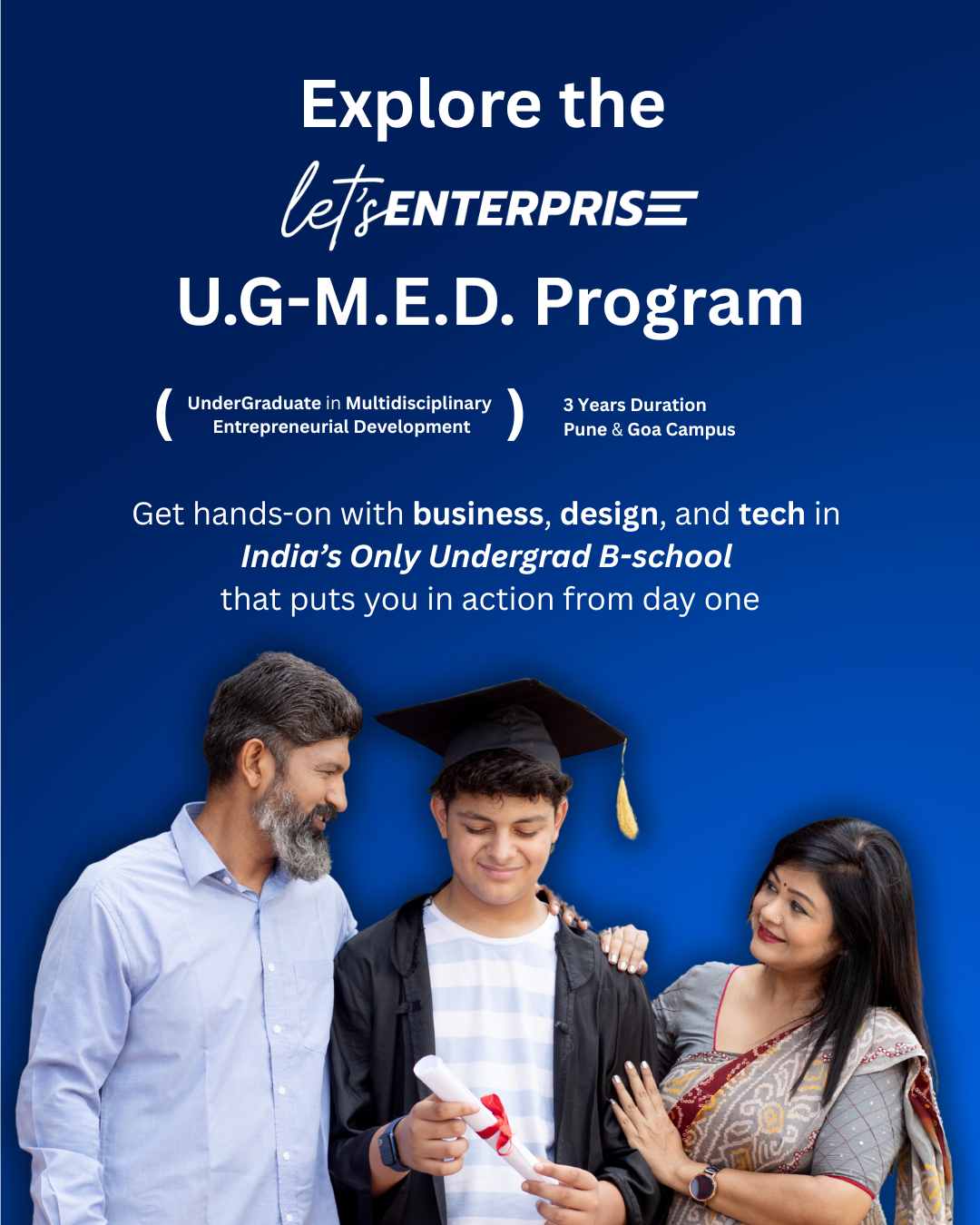
Let's Enterprise is a pioneering educational institution that empowers students with hands-on business skills through its unique UG-M.E.D. program. With campuses in Pune and Goa, it bridges the gap between traditional learning and real-world experience, shaping the future of tomorrow's entrepreneurs.
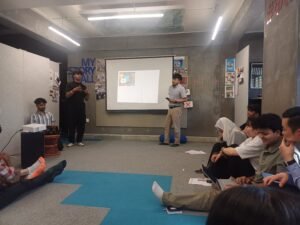
Discover how our first-year students are actively engaging in real-world business projects, guided by facilitator Sharjeel Shaikh.