What Is Experiential Learning and Why It Is the Future of Business…
Experiential learning is the fastest-growing model in business education globally — and the most misunderstood in India. Here…

May 25, 2026
BBA and B.Com are the two most common business degrees chosen after Class 12 in India — but they are not interchangeable. BBA builds general management skills across marketing, finance, and operations. B.Com builds depth in accounting, taxation, and financial compliance. The right choice depends entirely on the career you are building, not the degree your neighbour’s son took.
A Bachelor of Business Administration is a three-year undergraduate degree covering management principles across multiple business functions. A typical BBA curriculum includes marketing management, financial accounting, human resources, business law, operations, entrepreneurship, and economics.
BBA is designed to make you a generalist — someone who can understand how different parts of a business fit together. This breadth is its strength for students who want to move into management roles, startups, sales, consulting, or entrepreneurship. It is also its limitation: generalism without depth can leave graduates appearing capable on paper but hesitant in practice.
A Bachelor of Commerce is a three-year undergraduate degree with heavier emphasis on accounting, financial reporting, taxation, auditing, and commercial law. It is the standard academic pathway for students planning to pursue CA (Chartered Accountancy), CMA, or careers in banking, taxation, and financial compliance.
B.Com gives you depth in one domain rather than breadth across many — and for the right career path, that depth is genuinely valuable. Students who know they want to become CAs, work in statutory audit, or build careers in banking and financial services are well-served by B.Com’s structured focus.
Whether you choose BBA or B.Com, you will spend three years primarily in classrooms, studying theory designed for examinations rather than for workplaces. Most BBA and B.Com graduates enter the job market having never managed a real project, worked with an actual client, or made a decision with real consequences.
Hiring managers across India consistently flag this gap. The India Skills Report has repeatedly shown that fewer than half of management graduates are considered immediately employable. This is not a problem with the students — it is a problem with how both degrees are designed.
The question to ask about any business degree is not whether it is BBA or B.Com. It is: how much real work will I have done by the time I graduate?
For students who want the career breadth of a BBA combined with real-world work from semester one, Let’s Enterprise’s Working BBA in Pune offers a different model entirely. Students earn a UGC-approved BBA degree from DY Patil University or Pune University while completing 4 real apprenticeships and 13 live client projects across three years.
By the time a Working BBA student graduates, they have 15 months of documented real-work experience, three business specialisations, and a UGC-approved degree — before the age of 21. The programme starts at 17, right after Class 12, with 50 seats available for the August 2026 cohort.
The degree is real. The work is real. And the head start over both BBA and B.Com graduates compounds significantly in the job market.
Want a BBA that actually prepares you for work — not just exams?
Let’s Enterprise’s Working BBA gives you a UGC-approved degree from DY Patil University or Pune University plus 4 real apprenticeships and 13 live client projects. Starts at 17. 50 seats, August 2026.
BBA is better for students who want to work in management, marketing, sales, operations, or startups. B.Com is better for students planning to become CAs or build careers in accounting, taxation, and banking. Neither is universally superior — the right choice depends on your career direction, not rankings.
Average starting salaries after BBA in India range from Rs 3–4 LPA at mid-tier colleges to Rs 5–8 LPA at top private institutions. Salaries vary significantly based on the college, the specialisation, and critically — the amount of real-world experience a student has built during the degree.
Yes. B.Com graduates are eligible for MBA programmes through CAT, MAT, XAT, and other entrance examinations. Most top MBA programmes admit students from any undergraduate background, including B.Com. However, students without work experience often find MBA admissions and outcomes less strong than those who have built real professional experience first.
BBA typically opens more diverse management and business roles, while B.Com opens deeper accounting and finance specialisations. In terms of sheer volume of openings, BBA graduates compete for a broader range of positions. However, both degrees face the same challenge in 2026: employers increasingly prefer candidates who can demonstrate real skills over those who can only show a degree.
A traditional BBA is delivered primarily through classroom instruction, case studies, and examinations. An experiential BBA — like Let’s Enterprise’s Working BBA — integrates real apprenticeships, live client projects, and measurable real-work outcomes into the degree structure. Students graduate with both a UGC-approved credential and a documented track record of real professional work.


Experiential learning is the fastest-growing model in business education globally — and the most misunderstood in India. Here…

Most families calculate the tuition fee when budgeting for a BBA in India. The real cost is two…
Work-integrated education — earning income and building professional experience while studying for a degree — is growing fast…

Let's Enterprise is a pioneering educational institution that empowers students with hands-on business skills through its unique UG-M.E.D. program. With campuses in Pune and Goa, it bridges the gap between traditional learning and real-world experience, shaping the future of tomorrow's entrepreneurs.
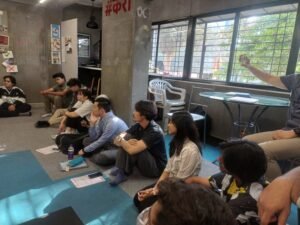
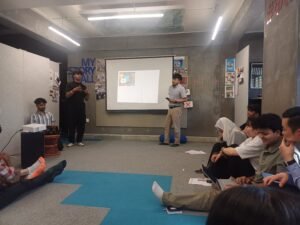
Discover how our first-year students are actively engaging in real-world business projects, guided by facilitator Sharjeel Shaikh.