What Is Experiential Learning and Why It Is the Future of Business…
Experiential learning is the fastest-growing model in business education globally — and the most misunderstood in India. Here…

May 23, 2026
India’s sharpest business students are skipping the MBA — not because they reject rigour, but because they have done the maths on compounding and found that starting real work at 18 beats starting a postgraduate credential at 23 by a margin no degree can close.
Masters Union’s Young Leaders Cohort (YLC) admits freshers into a 16-month programme built around practitioner faculty and live projects. Mesa School of Business, backed by Kunal Shah and Elevation Capital, runs a 12-month programme in Bangalore designed for students who want to operate inside the startup ecosystem from day one. Both share a core conviction: learning anchored in real work produces better professionals faster than learning anchored in theory.
The learn-by-doing thesis is not new — apprenticeship has been the dominant model for professional development for most of human history. What is new is that India now has institutional structures that apply it to business education.
Masters Union and Mesa School make a compelling case that learning embedded in real commercial work accelerates professional development at 24. Their reported outcomes suggest the model delivers meaningful results.
But the premise of that argument, followed to its conclusion, points somewhere these programs cannot go: if learning compounds faster when anchored in real work, then starting that compounding at 18 rather than 24 produces a professional who is six years into structured real-world learning by the time their peers begin their postgraduate programs.
If experiential learning at 24 outperforms classroom learning at 24, then experiential learning at 18 outperforms experiential learning at 24 — because the only thing better than the right method is the right method applied earlier.
A student who begins structured real commercial work at 18 enters the job market at 21 with three years of demonstrated professional experience — a head start that compounds for the entirety of a career.
Structural experiential learning means real commercial work is woven into every week of the programme — students work with actual companies, on actual deliverables, with actual professional consequences. Add-on experiential learning means a conventional curriculum has been supplemented with guest speakers, industry visits, or a final-semester internship.
Most programs that call themselves “experiential” are add-on, not structural — and students who cannot tell the difference will pay experiential prices for a conventional education.
The test is simple: ask any program how many hours per week, in a typical week, a student spends on live commercial work versus classroom instruction. If the answer is vague, the experiential label is decorative.
For many career paths, yes — especially in startups, technology, and entrepreneurship, where demonstrated competence outweighs credentials. The MBA’s value is strongest in traditional corporate paths (consulting, banking, FMCG). The decision should be made based on your specific target role, not received wisdom about what prestigious education looks like.
Experiential MBA education refers to programmes where learning is structured around real commercial work rather than classroom theory. Masters Union’s PGP TBM and Mesa School’s Startup Leadership programme are the leading Indian examples. Structural experiential programmes embed live project work throughout the curriculum; add-on programmes supplement traditional teaching with occasional industry exposure.
Students on the conventional undergraduate-plus-MBA path typically enter serious professional roles at 25-26. Students on postgraduate experiential programmes enter at 22-23. Students on undergraduate experiential programmes with real work from day one can enter at 21 — with three years of demonstrated professional experience already behind them.
Let’s Enterprise is the undergraduate version of this argument: a 3-year UGC-approved Working BBA in Pune with real apprenticeships beginning from the first semester. You graduate at 21 with a recognised degree, verified professional experience, and a compounding advantage your peers will spend the next five years trying to close. Learn more at letsenterprise.in.


Experiential learning is the fastest-growing model in business education globally — and the most misunderstood in India. Here…

Most families calculate the tuition fee when budgeting for a BBA in India. The real cost is two…
Work-integrated education — earning income and building professional experience while studying for a degree — is growing fast…

Let's Enterprise is a pioneering educational institution that empowers students with hands-on business skills through its unique UG-M.E.D. program. With campuses in Pune and Goa, it bridges the gap between traditional learning and real-world experience, shaping the future of tomorrow's entrepreneurs.
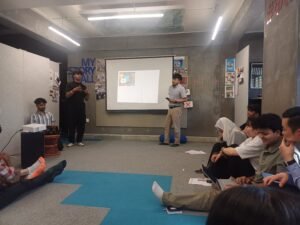
Discover how our first-year students are actively engaging in real-world business projects, guided by facilitator Sharjeel Shaikh.